We asked around, scrolled LinkedIn, followed rabbit holes, and landed on a group of creatives who were experimenting, sharing their learnings, and showing the industry what was possible. Back then, the conversation was largely about potential and experimentation.
But a lot can change in a year.
Today, AI has become part of the day-to-day reality for many professionals. The technology has matured, adoption has taken hold, and the conversation has shifted from experimentation to execution.
But maybe the biggest change isn't the technology—it's the people. We're starting to see a new generation of AI specialists emerge across the industry. They got there by following their curiosity, learning by doing, and helping shape what these roles are becoming.
And all that expertise is emerging everywhere. From creative production and technical development to legal and strategy, we're seeing AI reshape careers just as much as it's reshaping the content itself.
So, we gathered another group of people leading that change and asked them a few questions about their work, their perspective on AI, and where they see things heading next.
So without further ado, meet the AI Movers & Shakers of 2026.

The challenge will be less about generating content and more about consistently achieving the level of quality that brands and audiences expect.
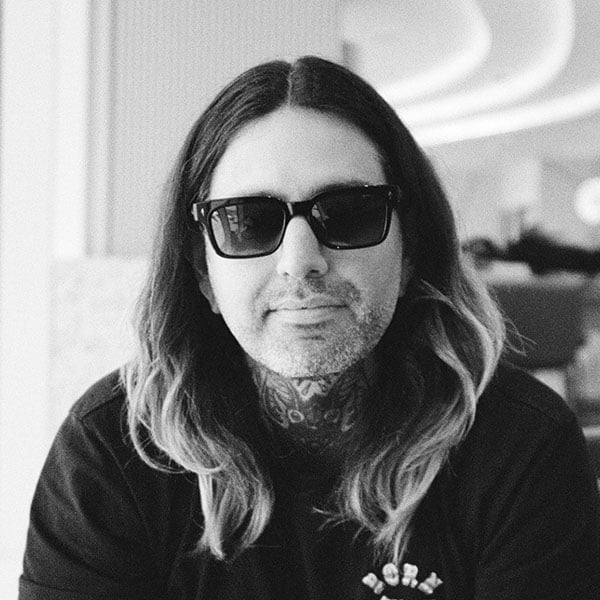
The gains go from individual to organizational. AI will make teams more efficient and more strategic, but the real shift is leadership embedding it from the top down.

It doesn't matter whether something is captured with a camera or generated through a tool. The important thing is what it makes you feel.

The most valuable opportunities often come from combining your existing expertise with AI tools.

Don't chase 'AI' as a job title. Start with the thing you already understand well or are passionate about, then learn how AI is changing it.
From Experimentation to Integration
If last year was about figuring out what AI could do, this year is about figuring out how to make it work. Experimentation isn't going anywhere and it shouldn't. But the conversation has shifted from proving the technology to refining it: building better workflows, defining best practices, navigating governance, and finding the right balance between AI and human creativity.
Beyond the low-hanging fruit of gen-AI, it's woven into our backend processes and project management, and increasingly into marketing as well.
Alex Stone
Today, AI has become a crucial part of my role as an Art Director at Pixelz. It helps me transform and execute creative ideas more efficiently, enabling faster concept development, visual exploration, and content creation.
AI has become an essential tool in my workflow, allowing me to focus more on creativity and strategic thinking while making more efficient execution and production processes.
Cristina Calvet
Today, AI is simply another creative medium, just like photography or 3D. For us, it's not about replacing existing processes but about expanding the creative toolkit.
What excites us most is the ability to explore ideas that previously would not have been possible to produce. It encourages experimentation, accelerates iteration, and gives us more opportunities to test different creative directions.
At the same time, it allows other teams to focus on what they do best, opening up new opportunities for innovation across the organization.
Albert Rodríguez Coma
I built a strong foundation in AI-driven content creation through continuous, hands-on use. Today I use it daily, so it has become a natural part of my workflow and creative process. That constant practice has given me confidence when approaching new projects, since I already have a clear understanding of what the tools can and cannot do in a production context.
Carlos Muñoz
Curiosity is still the entry point
Last year, curiosity was the driving force behind many of our AI Movers & Shakers. A year later, that hasn't changed.
Whether it started with a creative experiment, a production challenge, a legal question, or simply a fascination with where the technology was heading, they all followed the same instinct: they kept asking questions.
They opened new tools. They tested ideas. They read, researched, experimented, and stayed curious long after the first wave of excitement had passed.
That curiosity became a habit. One question led to another, practical experience turned into expertise, and over time, many became the people helping shape how AI is used across the industry.
As an early adopter, I've always gravitated toward new technologies, so conversations around AI began with my own personal experimentation.
Alex Stone
The first conversations around AI were driven by a mix of curiosity, excitement, and uncertainty. For many of us, it felt like the opening of a new world full of possibilities.
My first experience with AI came through personal experimentation. I started exploring it as a creative tool, using it to bring ideas from my imagination to life. Coming from a creative background, I was fascinated by its potential to transform concepts into tangible outputs and expand the creative process in entirely new ways.
Cristina Calvet
I think the most important factor has been curiosity. The best way to become familiar with AI is to explore it, understand what it can do, and constantly test its possibilities.
Because it's still a rapidly evolving field, there is a significant amount of self-learning involved. A lot of the process comes down to experimentation, trial and error, and staying open to new tools and workflows as they emerge.
At the same time, I've been fortunate to work in an environment where knowledge sharing is encouraged. Collaboration, internal training, and working alongside professionals from different backgrounds have all been incredibly valuable sources of learning. In many ways, understanding AI has been both an individual and a collective journey.
Albert Rodríguez Coma
In 2018, I read Scarlett Johansson’s interview about being “deepfaked” into pornography. Although this faceswapping technology was still years away from going mainstream, a few journalists and academics started to shine a spotlight on non-consensual sexual deepfakes. Campaigners soon started the difficult and important work of changing the law to combat this sort of deplorable content. But I kept coming back to a different question: What was stopping production companies and studios from making deepfakes of actors anyway? Why wouldn’t they create perfectly-behaved, fuss-free digital clones at a fraction of the cost? I couldn’t stop thinking about it - and that’s why I wrote one of the first peer-reviewed papers in the world to explore AI in the context of copyright and publicity law in 2019. Since then, my expertise has expanded to the use of AI more generally. I’ve advised clients from global broadcasters to indie production companies, regulators, performers, and universities on how to navigate AI’s application in the media, entertainment, and publishing sectors.
Kelsey Farish
Nobody Waited for Permission
One thing nearly every contributor had in common was that they took ownership of where their careers were headed.
They recognized where the industry was moving, invested in learning the technology, and gradually carved out new areas of expertise for themselves.
These aren't careers that existed a few years ago. They're the result of people identifying opportunities before they were obvious and choosing to grow alongside the technology. As AI continues to reshape e-commerce content, it's also creating entirely new career paths and our AI movers and Shakers are helping define what those paths look like.
Self learning, self education, and trial and error.
Alex Stone
Becoming comfortable with AI has been an ongoing journey with different stages of learning and adaptation. I would describe it as a combination of experimentation, self-learning, collaboration, and continuous trial and error…
Cristina Calvet
AI conversations started through personal experimentation. I was one of the first people in my team to explore how AI could be integrated into our workflow. I spent a lot of time researching, testing different tools, and learning everything I could on my own. Once I had a solid understanding of its potential, I started introducing those ideas and use cases into our work.
Carlos Muñoz
The Challenges that are Changing
The conversation around AI is evolving again.
Not long ago, everyone was trying to figure out how to get usable results from the technology. Today, that's no longer the biggest hurdle. Instead, creative teams are facing a different challenge: keeping pace with rapidly rising expectations while preserving the originality that makes their work stand out.
As AI becomes more accessible, creating content is becoming easier. Creating content that still feels distinctive isn't. The brands that succeed won't be the ones using the most AI, they'll be the ones using it without losing their creative identity.
As AI has improved, expectations have grown alongside it. What felt incredible a year ago can feel average today. The quality bar keeps rising, and I don't see that changing anytime soon.
Albert Rodríguez Coma
LLMs are extremely good at producing something fluent and plausible, but they often pull complex material towards a generic center. Nuance gets flattened, ambiguity gets tidied away, and difficult questions are reframed into safer, more conventional answers.
Kelsey Farish
So, What's Next?
We asked our Movers & Shakers to dust off their crystal balls and tell us what’s coming next.
Surprisingly, very few of their predictions were about the technology itself. Instead, one theme emerged: the future isn't just about better AI—it's about better systems around AI.
The conversation is shifting beyond the tools themselves and toward everything that makes them usable at scale: leadership, governance, workflows, quality control, and creative direction. The technology will continue to improve, but the bigger challenge will be integrating it responsibly, consistently, and in ways that create real business value.
Perhaps that's the clearest sign of how far the industry has come. A year ago, many teams were still wondering whether AI belonged in e-commerce content. Today, the conversation is about how to build organizations that can use it well—not just this year, but for years to come.
I think the next phase is less. “Can we use AI here?” (aka "Will we get in trouble?") and more “Can we prove we used it properly?” We’ll see tighter regulation, landmark cases and much tougher contractual fights over who carries the risk.
The real pressure point will be evidence: what went into the system, who authorized it, which terms applied, how much human input there was, and whether the output was labeled. Brands should start building that paper trail now - and remembering to do regular vibe checks!
Kelsey Farish
My prediction: the gains go from individual to organizational. AI will make teams more efficient and more strategic, but the real shift is leadership embedding it from the top down. I already see co-founders, CEOs, and CMOs using AI to drive their organizations forward. Next year, that becomes the expectation, not the exception.
Alex Stone
My prediction for next year is that organizations will focus on establishing even more structured creative processes and workflows around AI. As the technology matures, I believe we will see significant improvements in efficiency, quality, and speed. AI will become more deeply integrated into everyday creative workflows, allowing teams to spend less time on repetitive tasks and more time on strategic and creative thinking. The focus will shift from simply using AI to optimizing how it is integrated into professional processes.
Cristina Calvet
Looking ahead, I think the biggest changes won't necessarily come from entirely new technologies, but from better integration into existing workflows. The tools will become more reliable, more controllable, and more closely connected to the creative process. The challenge will be less about generating content and more about consistently achieving the level of quality that brands and audiences expect.
Albert Rodríguez Coma
I think this year marks a clear shift for studios and production teams. Up until now, most of the conversation around AI was theoretical, whether it would change things or not. But that phase is over. It’s now a reality, and we’re actively seeing how it reshapes content creation.
We’re entering a very interesting moment where workflows, studios, and the entire industry will change significantly. Being part of that transition feels meaningful, especially contributing to how those changes take shape.
In a few years, when everything works differently, I think we’ll also value having been part of the “before” era. It gives us a strong foundation in photography and video, and I believe that understanding the industry from the inside, combined with artistic sensitivity and taste, will remain highly valuable for creators.
Carlos Muñoz
Advice from the 2026 list
Don’t chase the AI job title. Start with the thing you already understand well or are passionate about, then learn how AI is changing it.
Kelsey Farish
Just start. You're not as far behind as you think. The technology is new, and you can use AI to teach you AI. Anyone with the will to build something now has the means to do it. There has never been a more advantageous moment in human history to learn or create, AI included.
Alex Stone
I would say that transitioning to a more AI-driven role is a process that requires patience, curiosity, and persistence. There will be successes and setbacks, and trial and error is an inevitable part of the journey.
My main advice is to start integrating AI into your current profession rather than viewing it as something separate. The most valuable opportunities often come from combining your existing expertise with AI tools. Focus on learning through practical application, stay curious, and continuously experiment to discover how AI can enhance your own skills and workflows.
Cristina Calvet
My advice would be to use your existing expertise as a foundation. AI is a powerful tool, but it's your experience and judgment that help turn its potential into meaningful results.
Knowing when to use AI, how to guide it, and when not to use it can be just as valuable as mastering the technology itself.
Albert Rodríguez Coma
Go all in, without hesitation. This is not something that’s going away. There will always be debates about whether it’s better or worse, but the reality is that it’s here to stay.
We’re entering a new way of creating, and it’s important to embrace it rather than resist it. It opens a completely new space for artistic expression, and we should take advantage of that shift.
In the end, it doesn’t matter whether something is captured with a camera or generated through a tool, the important thing is what it makes you feel. That’s what defines the work.
Carlos Muñoz
Work Worth Celebrating
Kelsey Farish
I've started a newsletter to share my insights on AI, copyright, and other interesting media law things.
Carlos Muñoz
A better way to work
Albert Rodríguez Coma