
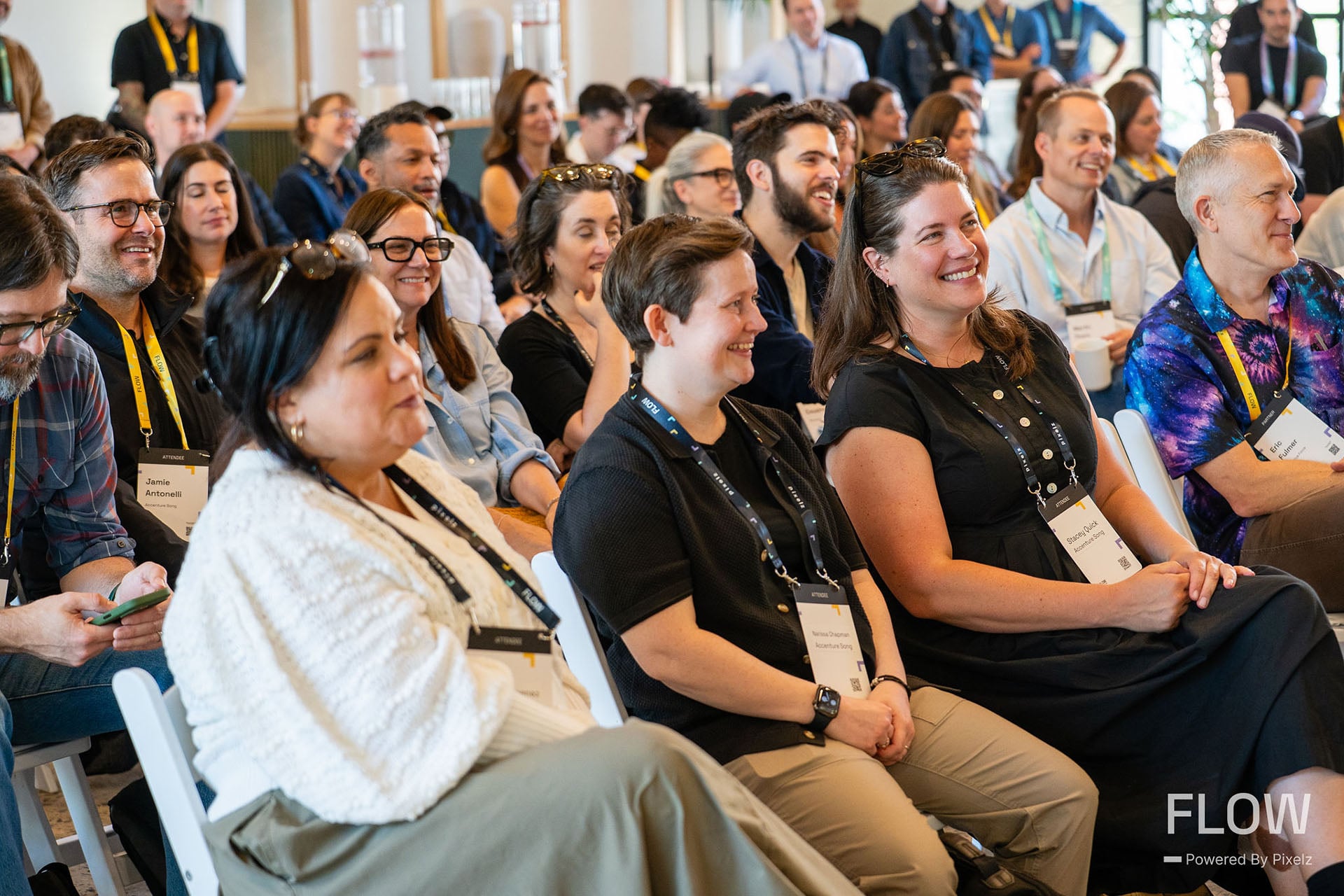
Bringing FLOW to New York is like coming home. The community here is long-standing, after all, the very first FLOW was right here in Brooklyn, and whether we see everyone in person or their names pop up in webinars, the New York creative community has become the foundation on which FLOW was built and from which it's continued to grow across the US and Europe. Walking into the room, you could feel it: this wasn't just an event, it was a reunion.
But enough about the vibes. Let's talk about the content and conversations that actually filled the day.
Setting the Tone
Ryan Roberts kept the energy moving all day as MC, and from the moment he opened the event with his rendition of New York, New York - the room was locked in.
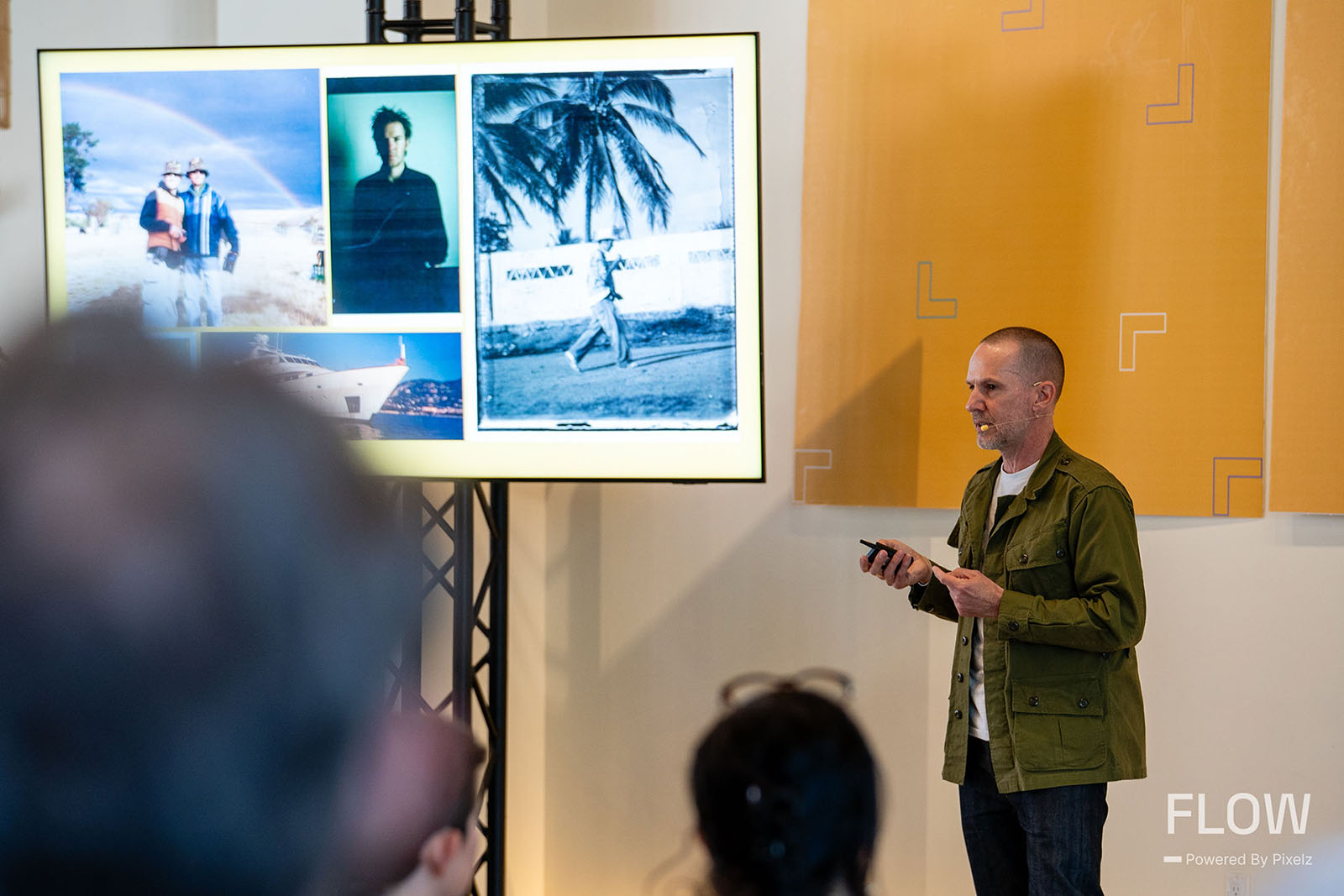
The first keynote went to Bryce Pincham, and he said something that stuck with me. His session, Creative Transitions: From Career Pivots to AI in Practice, was a rare kind of talk: practical, honest, and a look at what it takes to build a career in this industry. Bryce spoke openly about the reality of pivoting as a creative, leading teams through uncertainty, and what it actually takes to stay relevant when the industry keeps shifting beneath you. He also spoke on AI and the benefits it can bring, with the very careful reminder that, in his words, "You can use technology to scale up without also cannibalizing the soul of the industry." It was exactly the right note to open the day on.
Coffee, Connections, and Getting Real About AI
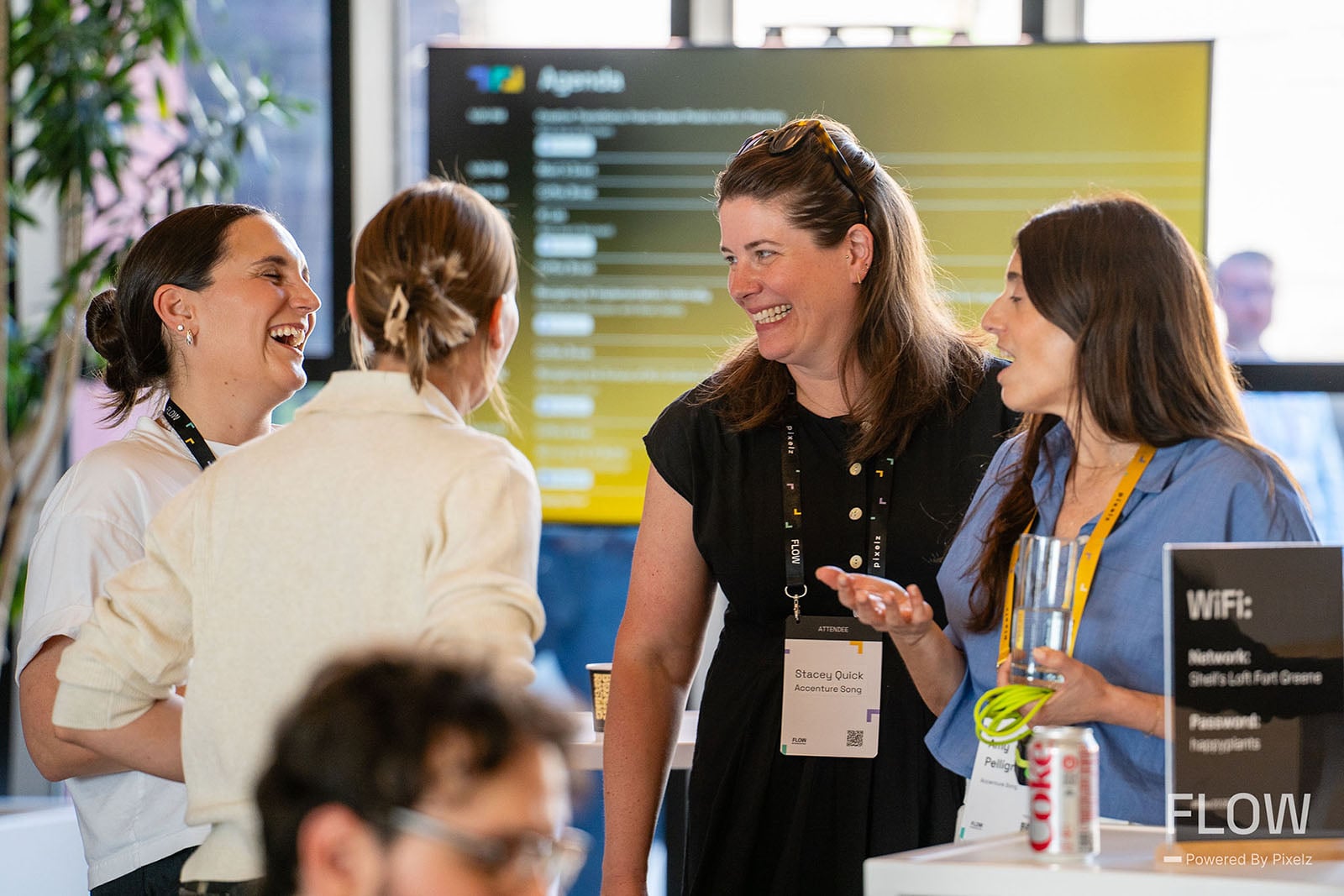
After Bryce wrapped up, we broke for coffee, and the meet & greet that followed was one of those moments that remind you why in-person events still matter. There's something about a room full of people who actually do this work every day. The conversations start fast and go deep.
Then Kevin Boutwell took over with the AI Lab, and this session had a different kind of energy. All workflows. Kevin walked the room through the actual behind-the-scenes of generating AI-powered e-commerce visuals at scale: what asset generation really looks like, what input data you need to get consistent results, and what it genuinely takes to get web-ready visuals for the PDP. There were some outspoken opinions when we got to the styling of hero products, particularly when it came to shoes. It was a real, transparent look at the actual work that goes into creating AI-generated content at Pixelz. Less a presentation, more a look under the hood.
Four Workshops, Four Conversations
Attendees split across four workshops, and the conversations that spilled out into the breaks afterward made clear that every room had something worth staying for. Marshall Long led A Smoother Path From Capture to Delivery With Capture One, walking through a practical studio setup and some of the platform's newer updates: things that help teams edit faster, collaborate more cleanly, and hand work off without the usual friction. The integration with Pixelz was a highlight. Kevin Boutwell jumped in for a live demo showing how Pixelz specifications can be accessed directly within Capture One, giving the room a real look at how shooting, editing, and post-production can link together more seamlessly than most teams have experienced.
In the other room, Brian Guidry facilitated Navigating AI Implementation Internally, an attendee-led discussion that clearly hit a nerve. The conversation surfaced the real friction: handling proof-of-concept projects that stall before they scale, a growing tech stack that nobody fully owns, and the challenge of managing stakeholders with very different ideas about what AI should and shouldn't do. It was the kind of discussion where people were finishing each other's sentences, because they were all living the same problems.
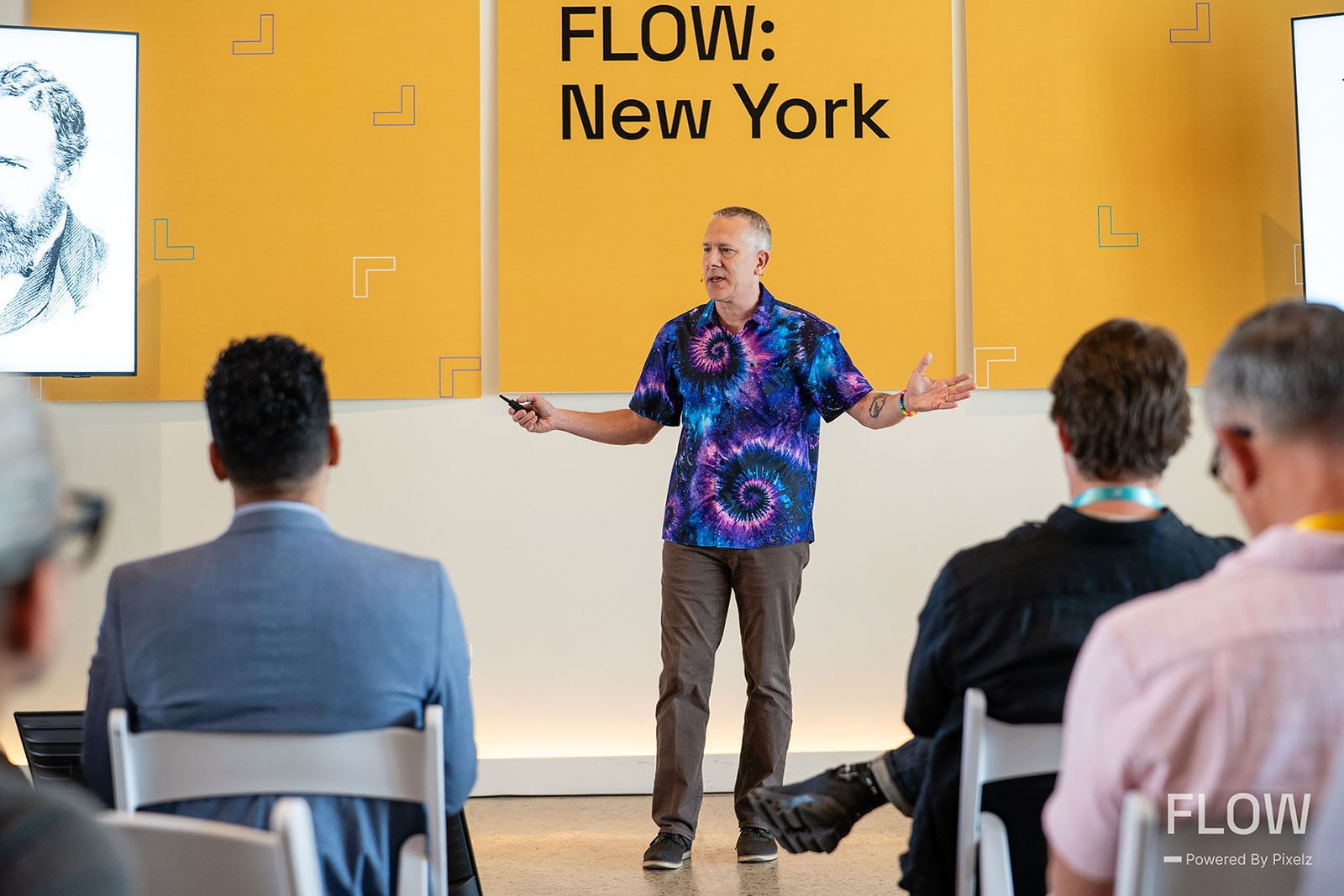
Eric Fulmer from Creative Force led the third workshop, Navigating the Future of AI in Content Operations, and he took the room somewhere a little unexpected. The session pivoted away from the usual scarcity framing, less "how do we do more with less" and more "what would we do if content was no longer the constraint?" Eric walked attendees through a thought experiment about the actual value that more content could unlock for their organizations. It reframed the question in a way that stayed with people after the session ended.
And then there was Let's NOT Talk About AI. The brief: anything but AI. What actually filled the conversation? Team dynamics. Creative outlets outside the studio. How to evaluate skills in a changing industry. And yes, movies and TV shows that inspire creativity. It was a reminder that the most pressing things on people's minds aren't always the ones that make it onto the agenda. Don’t worry, the no AI rule was strictly enforced!
Closing the Day
To close out FLOW: New York, Pixelz CEO Thomas Ladefoged delivered the keynote we’d clearly been building toward all day: Winning the AI Battle: C-level Thinking For Creatives.
Thomas made one thing clear from the start: rethinking how you work isn't enough anymore. It's time to rebuild. Layering AI onto existing workflows isn't winning anything; it's a fast track to over-optimization, to content that all looks the same, or worse, what Thomas called "the abyss of trivial content."
The opportunity, as he laid it out, is something bigger: putting creatives back at the center of how business and technology evolve together. Not just using AI, but shaping how it gets built, developed, and integrated in a way that actually serves creativity rather than flattening it.
It was a fitting note to end on. A challenge to the industry to ensure our creativity remains intact. And the room felt it.
The Knicks won the game that night, the weather held, and FLOW: New York delivered. Some days just line up. We'll be back.