
So, why do AI-generated images still need retouching and post-production?
Because even when an AI-generated image looks great at first glance, the details don't always hold up. Lighting can feel slightly off, shadows might not quite make sense, textures can lose their realism, and colors or styling may not fully match the brand.
That's where post-production comes in. It's the step that catches those inconsistencies, refines the details, and turns a strong AI output into something polished, consistent, and actually ready for e-commerce.
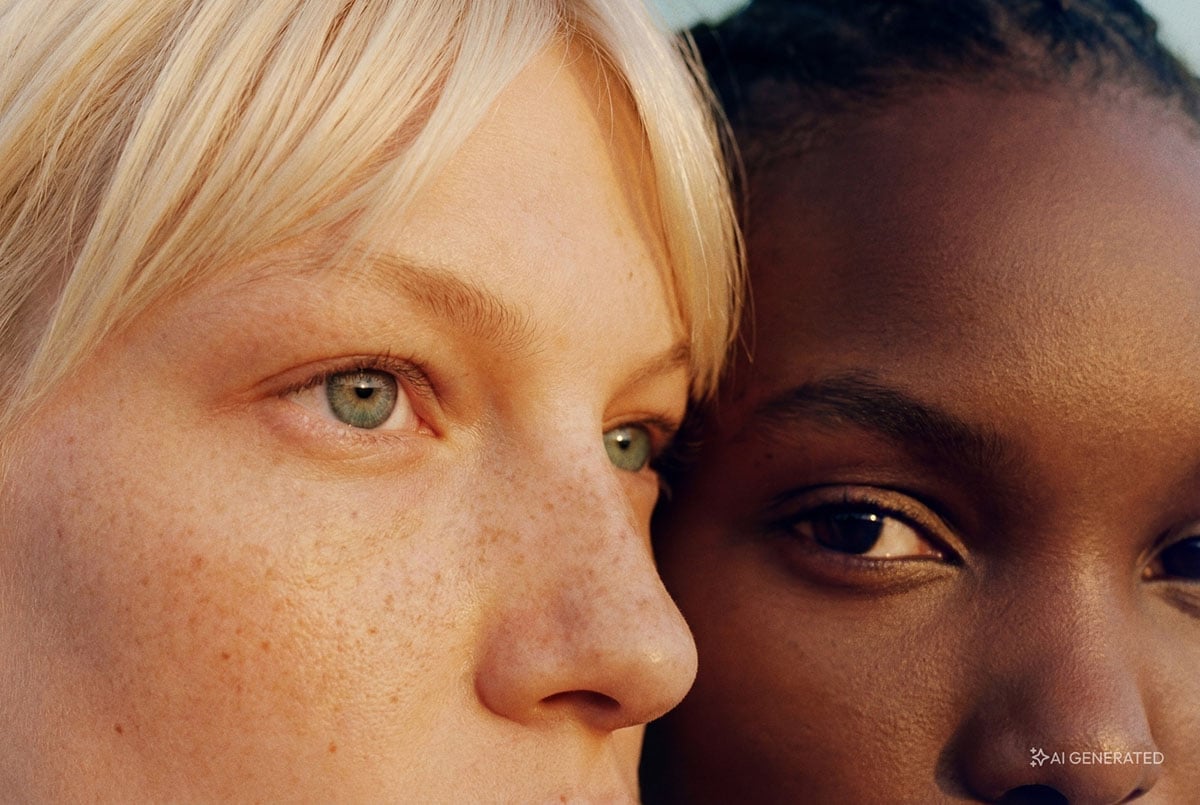
AI Knows the Look, Not Always the Why
AI is trained to recognize patterns. It knows what images are supposed to look like based on massive amounts of visual data. And that's what makes it so impressive.
But generating an image that looks right isn't the same as understanding why it works. A photographer makes deliberate choices throughout a shoot:
- Where should the light fall?
- How much shadow creates the right mood?
- What focal point deserves the viewer's attention first?
- How should the product feel?
- What emotion should the image communicate?
- Is the product accurate?
Those decisions aren't random. They're shaped by experience, brand understanding, taste, and instinct.
But that doesn't mean AI-generated imagery can't work for e-commerce. It absolutely can (we would know, we're generating a lot these days!). The important thing is understanding where AI still falls short and where post-production, retouching, and creative direction step in to bridge the gap.
And before we get into how AI can successfully work within e-commerce production, it's worth breaking down the biggest reasons post-production is still such an important part of the workflow.
Lighting & Shadows
Lighting is usually the first giveaway. AI often creates:
- Shadows that fall in conflicting directions
- Highlights that don't match the light source
- Flat lighting with no depth
- Overly dramatic contrast without realism
Even small lighting inconsistencies can make an image feel artificial. Post-production helps rebalance light, restore dimension, and create a more cohesive scene.
Composition
AI is very good at making images look visually appealing. But "pretty" doesn't always mean well-composed.
Strong composition is intentional. It guides your eye, creates balance, and makes the product the clear focus. And that's where AI can still fall short. Sometimes the image technically works, but something about it feels slightly awkward or distracting.
You'll often see things like:
- Objects placed in strange positions
- Cropping that feels too tight or unnatural
- Visual weight pulling attention to the wrong areas
- Background details competing with the product
- Scenes that feel overly busy or overdesigned
It's one of those things people notice subconsciously. The image might look impressive at first glance, but the longer you look, the more the composition starts to feel off.
That's where post-production and creative direction still play a huge role. Refinement helps simplify the frame, guide focus, and create a clearer visual hierarchy — similar to what a photographer, stylist, or art director would naturally shape during a real shoot.
Because good imagery isn't just about generating something beautiful. It's about making sure the eye lands exactly where it's supposed to.
Product Texture, Material, and Color
If there’s one thing AI really can’t afford to get wrong in e-commerce, it’s the product itself.
No matter how impressive an AI-generated image looks overall, shoppers are still zooming in on the details. They want to see how the fabric falls, how the metal catches the light, what the texture looks like up close, and ultimately, whether the product they’re seeing online matches what they’ll receive.
This is especially important in industries like fashion, beauty, and furniture, where material and finish can be a big part of the buying decision. Leather that suddenly looks like plastic, fabric that loses its texture, overly smoothed skin, or glass with unnatural reflections can quickly make an otherwise strong image feel off.
And then there’s color.
AI can introduce subtle color shifts during generation, which becomes particularly noticeable across a PDP. Your flat lays or ghost mannequin images, might show one shade, while the AI-generated on-model image shows another.
And with 23% of returns linked to color dissatisfaction, it’s not a small detail. It’s one of the things worth paying particularly close attention to when reviewing AI-generated imagery.
Even worse is when all of the imagery is consistent with itself, but none of it accurately represents the actual product. At that point, it’s no longer just an image-quality issue. The customer could receive a product that looks noticeably different from what they thought they were buying.
That’s where post-production becomes essential: checking those details against the original product imagery and correcting texture, material, and color so the generated asset isn’t just convincing, it’s accurate.
Some of the biggest giveaway areas tend to be:
- Fabric texture and movement
- Hair detail
- Skin realism
- Metallic surfaces
- Glass reflections
- Product edges and finishes
Hallucinations
AI hallucinations have gotten a lot better. Between fingers, toes, and distorted limbs are way less common than they were a year ago. And hallucinations don’t always show up on the model itself.
Sometimes it’s a hand bending in a way that doesn’t quite make sense. Other times, it’s the way a model is sitting in a chair, interacting with a prop, or holding a product. A chair leg might disappear, an object might merge into something else, or the physics of the scene might simply feel a little off.
These details can be easy to miss at first glance, which is why they’re worth looking for during review.
From there, it’s a matter of deciding what makes the most sense: retouch or regenerate? A small distortion or awkward edge might be easy to clean up in post-production. But if the anatomy, object, or overall scene is too far off, starting with a new generation is often the better option.
AI is getting better at avoiding hallucinations, but for now, that final check still matters.
Brand Consistency
And finally: brand, brand, brand.
We're in an era where brands aren't just selling products, they're building a visual world. A recognizable aesthetic. A feeling. The kind of imagery that people instantly associate with you.
And once a brand finds that voice, consistency becomes everything.
That's one of the biggest challenges with AI-generated visuals. AI can create endless styles, moods, and aesthetics in seconds, but maintaining a cohesive visual identity across an entire brand ecosystem is much harder.
Because for visuals to truly feel on-brand, they need to connect:
- Consistent color grading
- Matching lighting styles
- Cohesive shadows and depth
- A recognizable tone and mood
- A visual language that feels intentional across every touchpoint
Raw AI outputs rarely achieve that level of consistency on their own. One image might feel soft and cinematic, while the next looks hyper-sharp or overly synthetic. Individually, they may look good, but together, they don't always feel like they belong to the same brand.
From AI-Generated to Brand-Ready
The best AI-generated visuals usually aren't coming straight out of the generator untouched. They've been:
- Cleaned up
- Corrected
- Composited
- Relit
- Color graded
In other words, they go through many of the same finishing steps as traditional photography. Because all the challenges we talked about can absolutely be improved and refined through post-production. That's where the image starts moving from "AI-generated" to something that actually feels polished, believable, and ready for e-commerce.
And that's not a bad thing. AI doesn't have to replace the creative process to be valuable. It works best when it becomes part of it.
So hopefully this doesn't discourage you from generating. To us, AI is simply another tool in the creative toolkit. A powerful one, yes, but still a tool. The human eye, creative direction, and intentional refinement are still what make images feel elevated, trustworthy, and on-brand.
That's also why post-production remains such an important part of the workflow. You still need someone to shape the final image, clean up inconsistencies, refine the details, and make sure it's truly ready for e-commerce.
And that's exactly where Pixelz comes in.
At Pixelz, we combine AI generation with professional retouching and aesthetic review built directly into the workflow. Whether you need PDP imagery, AI-generated lifestyle content, editorial-style campaigns, or scaled creative assets across your site, the goal is the same: helping brands scale content without losing quality, consistency, or creativity.