
Claudia is one of them. And what’s interesting is that her path into fashion and beauty photography wasn’t a straight line through a store and into a studio. It started in Cincinnati, with classical piano, fine art training, and an eighth-grade realization that’s pretty iconic: I like painting and drawing more. I want to do visual art.

The “pipeline” is Real, But the Spark is Personal
When you talk to creatives long enough, you start to notice the pattern: that early “pipeline” moment between ages 13 and 16 where something clicks. A first camera. A first obsession.
Claudia had that too, except hers looked like formal arts education and a foundation in making things by hand. After high school, she studied Fine Art at the University of Cincinnati’s College of Design (DAAP), Architecture, Art, and Planning, with a focus on 2D work like drawing and painting.
And then came the curveball: a professor who ran a photography gallery invited her to intern. Claudia’s reaction: Basically: You know I’m a painter… right?
But something about the way she approached assignments following the brief, but still making it hers, stood out. She started volunteering at the gallery, and what was meant to be an internship turned into years of hands-on work that shaped her into the kind of photographer who understands the full machine behind a creative career.
Not just the pretty part. The part that turns ideas into output.
The backend. The hours. The logistics. The business.
As Claudia put it: the “grunt work” is what teaches you how to actually turn work around and how to build something real.
The Technical Years
Before fully stepping into fashion and beauty photography, Claudia spent several years working in a digitization and digital services department at the Cincinnati Public Library. The work focused on photographing rare and fragile materials so they could be preserved and accessed digitally, less about creative expression, and more about precision, consistency, and long-term care. It was an environment rooted in process, where every decision around lighting, color, and handling had to be intentional and repeatable.
“That’s where I really honed my technical skills. I had a creative background already, but the archive work is where you cement the process.”
That experience became a powerful technical foundation. Working with medium format systems and specialized imaging setups sharpened her understanding of light, color accuracy, and workflow, while also building a deep appreciation for digital asset management. While the archive world sits far from fashion on the surface, it strengthened the discipline behind her creative work, bringing a level of technical confidence and structure that now supports everything she does on set.
The Fashion Eye from Retouching
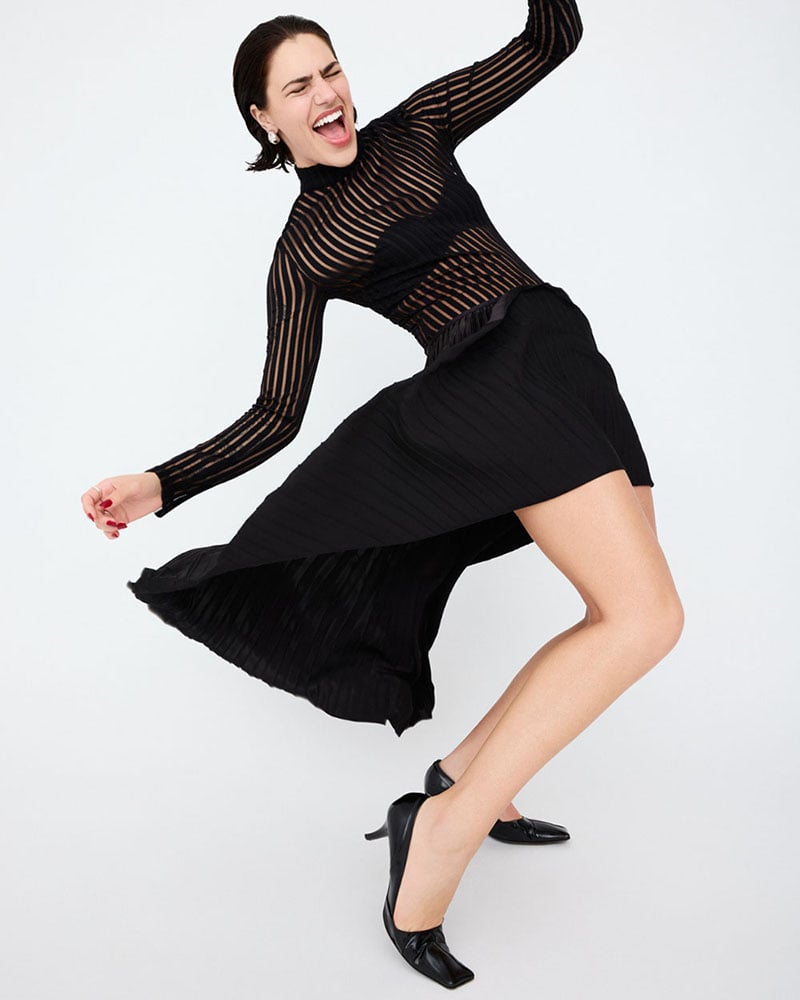
Before photography was paying the bills, Claudia was doing a lot of retouching — including for high-end brands and studios out of New York and retouching taught her something most people never see:
You see the image before it becomes the image.
Around the time retouching started getting heavily criticized for “creating impossible standards,” she revealed:
“A lot of the time, people really do look that good. High-end brands cast and style in ways that minimize how much fixing has to happen later.”
Not because the work is fake, but because high-end brands cast and style in ways that reduce how much “fixing” has to happen later. They hire talent that photographs consistently. They style clothes to perfection on set. They build a system where the image is already almost finished before post-production touches it.
She also talked about the impressiveness of “pose recall”, a model’s ability to recreate the same pose on demand, perfectly, again and again. It’s not just beauty; it’s skill. Like an actor dropping into character.
That attention to precision, consistency, and production reality clearly shaped how she shoots today, because even in her most dreamy editorials, there’s that foundation underneath it.
Editorial shoots are dreams… plus logistics
If you’ve ever romanticized editorial work (same), Claudia will gently bring you back down to earth, but in the best way.
Yes, editorials can be magical. But they’re also:
- scouting
- timing the sun path
- transporting gear
- planning craft services
- managing a team in a remote location
- and handling the unexpected like a dog sprinting over a hill and tackling you mid-location-scout video (yes, this really happened)
And still making it look effortless.
In one editorial we discussed, Claudia presented a mood board, defined a color palette, chose a location that moved her emotionally, and worked with a stylist she deeply respected — Tessa Clark (yes, Project Runway Tessa Clark), who came fully prepared with assistants, racks on racks of options, and a true professional’s ability to execute a vision at a high level.
That’s one of Claudia’s biggest themes: when the right people are aligned, the shoot becomes symbiotic. When they aren’t, friction shows up later, usually in the form of misaligned expectations.
The one word behind every successful shoot
When I asked Claudia what the biggest component of a successful shoot is, she didn’t hesitate:
Communication.
Not lighting. Not gear. Not mood boards (although… yes). Communication.
Because everything that goes wrong later usually traces back to the same thing: muddiness in expectations.
“I thought I was getting this… and instead I have this. What happened?”
Most of the success happens in pre-production — in those early conversations where you define what “done” looks like, what matters most, and what the team is actually trying to achieve.
Creative vision vs client curveballs: the “do our homework first” rule
Claudia also explained how she handles one of the most common on-set moments:
The client is happy. Everything’s rolling. And then someone says…
“What if we tried something totally different?”
Her approach is calm and strategic: secure the must-haves first.
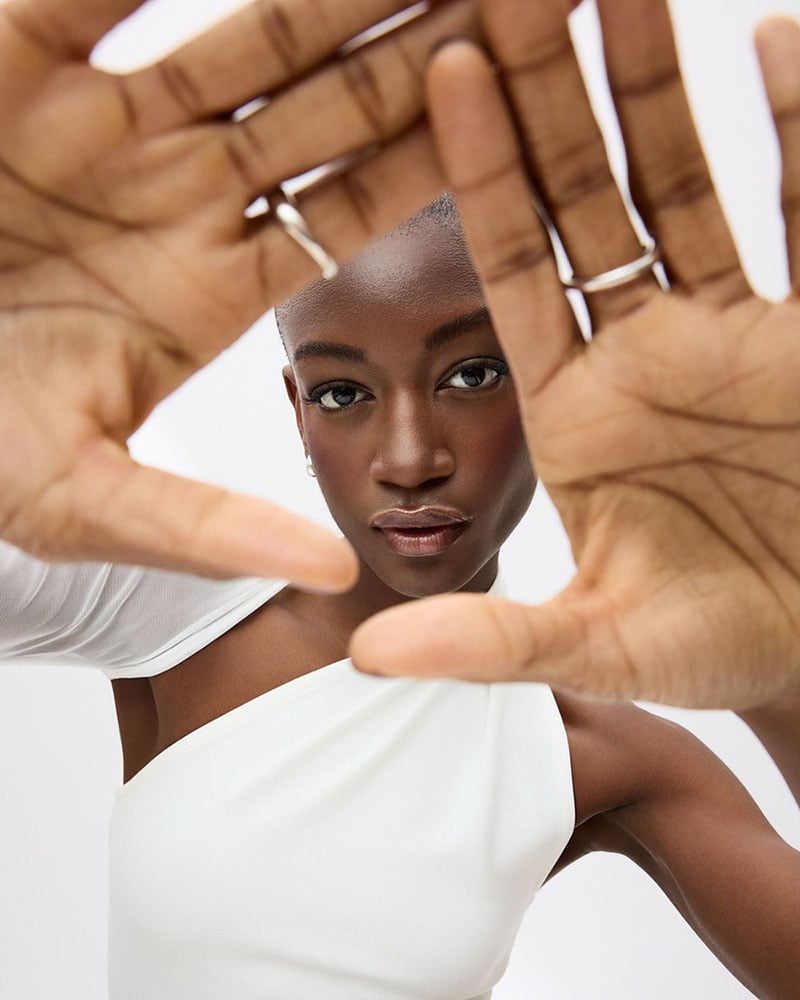
“Let’s do our homework first, get the shot list, get the insurance-policy images, deliver what the team promised internally. Then, if there’s time and budget, play.”
Because on commercial sets, every minute has a cost. People are on day rates. Overtime is real. And the photographer isn’t just protecting the images, they’re protecting the production.
It’s also a subtle kind of leadership: making the client look good on both sides of the process, not just in the final output.
Where her inspiration really comes from
Claudia’s inspiration sources span the expected (Instagram, Pinterest, editorials, fashion imagery online) and the tactile: real magazines, physical periodicals, going to bookstores and flipping through print because scale and texture matter.
But her favorite inspiration source might be the most timeless one:
“Light in the real world inspires me more than anything—how it moves, how it breathes, how it makes a space feel.”
She notices how light moves through trees, how it hits a driveway at one specific hour, how a space feels breathable. And then she asks: How do I recreate that feeling?
That “feeling” piece matters, because for Claudia, lighting isn’t just technical; it’s also emotional direction.
Lighting tells the model how to exist in the frame. It tells the viewer what kind of world they’re entering.
The deeper why behind her beauty work
Near the end of our conversation, Claudia shared something that feels like the heartbeat of her style:
“I like lighting that celebrates women as they are—natural, elevated, but still recognizable.”
A lot of her work aims for a sense of open air. Space. Freedom. Breath.
It’s subtle, but you can feel it: an intentional move away from claustrophobic perfection and toward something that feels expansive and human.
And it makes sense coming from someone who thrives on collaboration because collaboration, at its best, is also a kind of freedom. It’s a shared language. A team building something bigger than any one person could make alone.
The takeaway: Fashion photography is a team sport
If there’s a throughline in Claudia’s story, it’s this:
Fashion photography is not just aesthetic. It’s planning. It’s taste. It’s communication. It’s casting. It’s styling. It’s production reality. It’s the ability to hold a concept steady while still adapting to what happens on the day.
And when you do it well, the viewer walks away feeling like they’ve been transported, like they just briefly lived inside a persona, a narrative, a world. That’s the standard Claudia holds herself to.
Not just creating images that look beautiful, but images that feel like something and make you want to step closer.
If you want to keep up with Claudia, follow her on Instagram, LinkedIn or check out more of her work on her portfolio.